Artificial intelligence isn’t just influencing search — it’s completely rewriting the playbook. Here’s what you need to know.
The search landscape of 2026 looks nothing like it did just three years ago. AI is changing SEO in 2026 at a pace that leaves many businesses scrambling — and those who adapt early are capturing exponentially more organic traffic than those who don’t.
Search Engine Optimisation has always evolved — from keyword stuffing in the early 2000s, to mobile-first indexing in 2016, to E-E-A-T signals in the early 2020s. But the AI-driven transformation of search happening right now isn’t an incremental update. It’s a fundamental shift in how search engines understand queries, rank content, and deliver answers to users.
At DigiMint Web, we help brands across industries stay ahead of these changes with smart, data-driven strategies. In this guide, we break down exactly how artificial intelligence is reshaping SEO — and what actions your business needs to take today.
68%
of searches now have AI-generated answers at the top of results
3.4×
more engagement for content optimised with AI-assisted tools
40%
drop in click-through rates for sites not adapted to AI search
2026
the year AI-first indexing became the new standard for Google
1. AI-Powered Search Algorithms Have Changed the Game
Google’s algorithms — including the Helpful Content System, RankBrain, and the newer Gemini-integrated ranking models — now evaluate content using deep semantic understanding rather than simple keyword matching. The way AI is transforming search engine optimisation at the algorithm level means that traditional tactics like exact-match keyword density are nearly obsolete.
Modern ranking models assess topical authority, contextual relevance, content depth, and user satisfaction signals all at once. A page that provides genuinely helpful, well-structured, expert-authored content consistently outperforms thin pages that once gamed keyword density. This is one of the most critical ways AI is revolutionising SEO — it forces quality to win.
Key Insight: Google’s AI systems now understand synonyms, related concepts, and user intent so well that stuffing a page with your target keyword is not only unnecessary — it can actively harm your rankings by signalling low quality.
2. Generative AI and Search Overviews Are Reshaping Click Behaviour
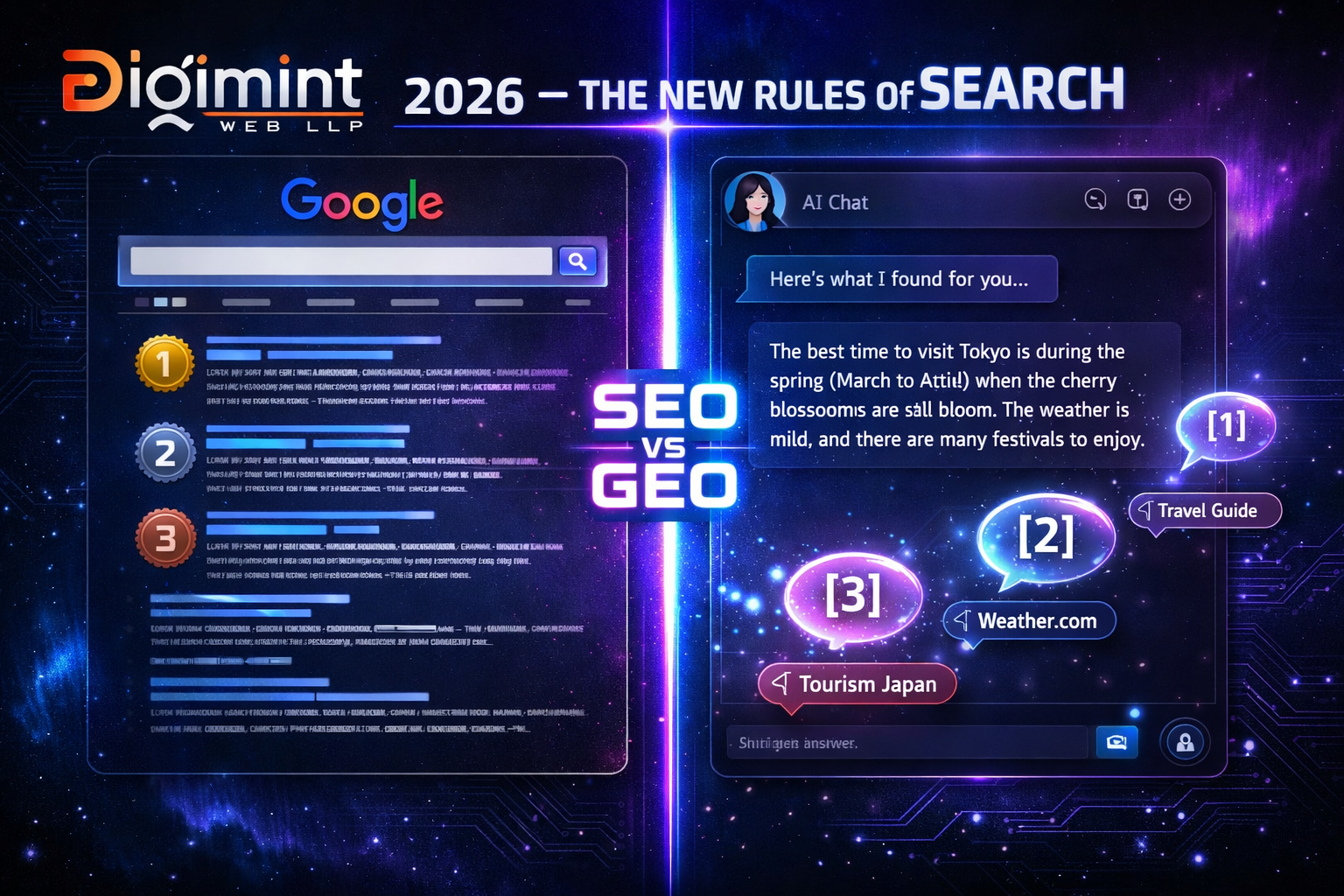
One of the most disruptive ways AI is evolving modern SEO is through AI Overviews (formerly SGE — Search Generative Experience). When a user searches for an informational query, Google now generates an AI-composed summary directly at the top of the SERP — often pulling from multiple sources without requiring users to click through.
This has dramatically reduced click-through rates for purely informational, top-of-funnel content. However, it has created a new opportunity: brands that are cited as sources within AI Overviews gain enormous authority and brand visibility. Being featured in an AI-generated answer is the new “Position Zero.”
To optimise for AI Overviews, your content must be structured clearly, answer specific questions concisely, cite credible data, and demonstrate first-hand expertise — all signals the AI-powered search intelligence layer is trained to reward.
3. Conversational Search and Natural Language Queries
The rise of voice assistants, AI chatbots, and large language model–powered search tools has radically changed how people phrase their queries. Users now search the way they speak — in full, conversational sentences. This is yet another dimension of how machine learning is redefining SEO strategies in 2026.
For instance, instead of typing “SEO tips 2026,” users now ask “What are the best SEO strategies I should follow for my small business in 2026?” Your content must be written to answer these natural, long-tail, intent-rich queries.
What this means for your content strategy
Incorporate FAQ sections, conversational subheadings, and question-based H2 and H3 tags throughout your pages. Structure your content to directly answer “who, what, when, where, why, and how” questions — this is the exact format AI search models are trained to surface as results.
4. AI Content Creation: Opportunity AND Risk
AI writing tools have become ubiquitous — and their impact on AI-influenced search optimisation is double-edged. On one hand, AI tools dramatically speed up content production, keyword research, and competitor analysis. On the other, search engines have become increasingly sophisticated at identifying generic, low-value AI-generated content that adds no real expertise to the conversation.
The winning approach in 2026 is AI-assisted, human-led content. Use AI tools to draft, research, and structure — but layer in original insights, real data, first-hand experience, and brand voice. Google’s E-E-A-T framework (Experience, Expertise, Authoritativeness, Trustworthiness) remains central to how AI evaluates which content deserves to rank.
- Use AI tools to identify content gaps, topic clusters, and semantic keywords
- Always add original expert insights, proprietary data, or real-world examples
- Establish author credibility with bios, credentials, and citations
- Maintain a distinctive brand voice — generic AI content blends into the noise
- Update content regularly to reflect current data and search intent shifts
5. Predictive SEO: AI That Anticipates Trends
One of the most exciting advances in how AI is modernising digital search tactics is the emergence of predictive SEO tools. Platforms powered by machine learning can now analyse search trend data, social signals, and content consumption patterns to forecast which keywords and topics will surge in popularity — before they peak.
Brands using predictive SEO tools can create and publish content weeks or months ahead of a trend, establishing topical authority before competitors even identify the opportunity. This is how forward-thinking brands capture first-mover advantage in organic search.
6. Technical SEO Gets Smarter — and More Demanding
The technical side of SEO has also been transformed by AI-driven algorithms. Core Web Vitals — which measure page experience — are now evaluated not just at a static snapshot but dynamically, using AI to model real user behaviour patterns. Page speed, mobile responsiveness, schema markup, and structured data are more important than ever.
Search engines now use AI to understand website architecture, crawl efficiency, and internal linking patterns. Sites with clear topical clusters, well-structured sitemaps, and logical internal linking consistently outperform those with fragmented content architectures. This is how AI is upgrading the technical fundamentals of SEO in 2026.
Pro Tip from DigiMint Web: Implement FAQ schema, HowTo schema, and Article schema across your key pages. AI-powered search models rely heavily on structured data to understand and surface content — it’s one of the highest-ROI technical SEO tasks you can do right now.
7. Personalisation: AI Serving Different Results to Different Users
AI has made search deeply personalised. Two people searching the same keyword can see entirely different results based on their location, search history, device, and browsing behaviour. This shift — how AI is customising the SEO landscape for individual users — means that optimising purely for a single universal ranking is no longer the whole story.
Brands must now think about SEO in terms of audience segments, not just keywords. Local SEO, personalised content experiences, and intent-based landing pages are all critical components of an AI-era SEO strategy. Your content should speak directly to the specific person searching — not just match a string of words.
The 6 Pillars of an AI-Era SEO Strategy
Every forward-thinking digital strategy in 2026 should be built on these foundations — each one shaped by how AI is accelerating change in search.
01
Topical Authority
Build deep content clusters around your core topics — not just individual keywords. AI rewards subject-matter mastery.
02
E-E-A-T Signals
Demonstrate real expertise, credible authorship, and trustworthy information on every page you publish.
03
Structured Data
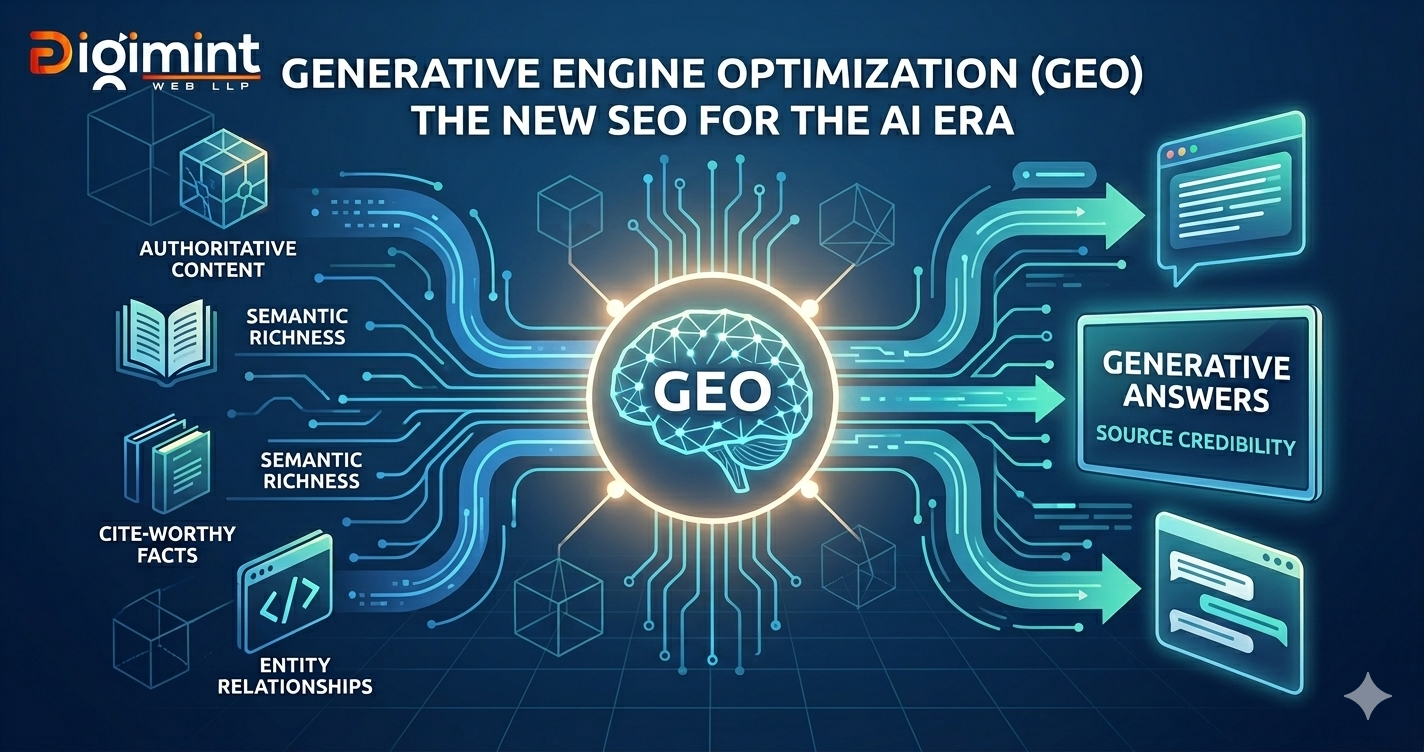
Use schema markup to help AI systems clearly understand your content type, context, and entity relationships.
04
Core Web Vitals
Prioritise site speed, visual stability, and interactivity — AI-driven ranking systems penalise poor page experience.
05
Conversational Content
Write content that answers natural language questions clearly and directly to capture AI Overview citations.
06
Continuous Optimisation
Use AI analytics tools to monitor performance, identify gaps, and adapt your strategy faster than competitors.
What Should Businesses Do Right Now?
Understanding how AI is transforming search engine performance is only half the equation. The other half is taking action. Here is what businesses of all sizes should be doing immediately to future-proof their SEO in an AI-dominated landscape:
First, conduct a thorough content audit. Identify which of your existing pages have thin, outdated, or low-value content and either upgrade or consolidate them. AI search systems increasingly penalise content bloat. Second, invest in technical SEO infrastructure — fast hosting, clean code, and structured data implementation aren’t optional anymore.
Third, establish your brand as a topical authority by building content clusters — a comprehensive pillar page backed by a network of supporting articles that cover every related subtopic. This is how AI search models determine whether your site deserves to rank for competitive queries.
Finally, stop thinking about SEO as a one-time project and start treating it as a continuous, data-driven process. The brands winning in 2026 are those that monitor their SERP positions daily, adapt their content based on AI Overview appearances, and iterate their strategies based on real performance data — not assumptions.
Conclusion: Adapt, or Get Left Behind
The evidence is undeniable — AI is changing SEO in 2026 in ways that are both challenging and full of opportunity. Businesses that embrace this shift, invest in quality content, technical excellence, and data-driven iteration will thrive in the AI-powered search era.
Those that cling to outdated tactics — keyword stuffing, thin content, and ignoring technical signals — will find themselves increasingly invisible in search results that are now curated by sophisticated AI models that genuinely reward helpful, authoritative, and expertly crafted content.
At DigiMint Web, we don’t just understand these changes — we build future-ready SEO strategies that help your brand grow organically in 2026 and beyond. Whether you’re starting from scratch or scaling an existing SEO programme, our team is ready to help.